Vehicle Rated Driveway Pavers Installation Guide for Long-Lasting Support
A driveway has an easy job right up until it does not. It looks flat and simple from the street, but once you put daily traffic, turning tires, delivery vans, summer heat, winter freeze-thaw cycles, and occasional oil drips on it, weak materials get exposed fast. I have seen plenty of beautiful paver driveways fail within a few years, not because the pavers were bad, but because the structure underneath them was never built for vehicles.
That is the whole game with vehicle rated driveway pavers. The top layer matters, of course, but the real success comes from matching the right paver to the right base, compaction, edge restraint, and drainage plan. If you get those pieces right, you end up with a surface that carries weight well, sheds water, resists rutting, and still looks good years later.
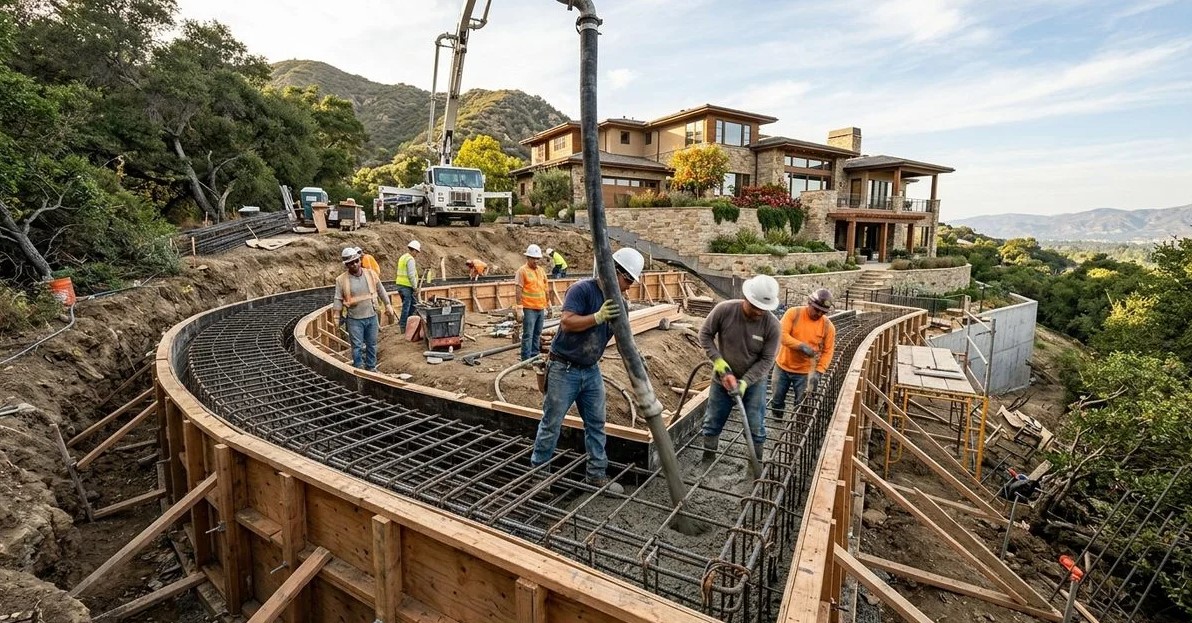
This guide walks through what actually matters when you are choosing and installing heavy duty driveway pavers. It is written for homeowners who want to understand what they are paying for, and for anyone comparing concrete driveway pavers, brick driveway paving, and natural stone driveway pavers with a practical eye.
What “vehicle rated” really means
“Vehicle rated” gets thrown around loosely in sales brochures. In practice, it means the pavers and the entire pavement system are designed to support cars, SUVs, pickup trucks, and sometimes heavier service vehicles without shifting, cracking excessively, or developing depressions.
A patio paver and a driveway paver can look almost identical from ten feet away. The difference usually comes down to driveway paver thickness, paver compressive strength, the jointing system, and the base depth beneath the pavers. A thinner decorative paver might do perfectly well on a backyard sitting area, but in a driveway it can crack under point loads or rock loose when tires turn in place.
For most residential applications, interlocking concrete paving stones are the safest bet because they are engineered for consistent strength and sizing. That consistency helps the load transfer from one unit to the next. Brick driveway paving can perform well too, especially if you are using true clay pavers intended for vehicular use, not standard wall brick. Natural stone driveway pavers can be excellent, but stone quality varies a lot, and some materials that look tough simply do not behave well under repetitive vehicle loads.
The paver is only one part of the system. A driveway with strong pavers on a weak base still fails. I have seen premium driveway pavers cost thousands more than standard options, only to end up with wheel path settling because the excavation was too shallow and the aggregate base was undercompacted. That is not a paver problem. That is an installation problem.
Material selection starts with traffic, not color
People usually begin with appearance. They think about driveway paver color options, driveway paver surface finishes, and whether they want large format driveway pavers or small format paving stones. That is understandable. The driveway is a big visual feature. But if you want long-term performance, driveway paver material selection should start with how the surface will be used.
A two-car household with light daily traffic has different needs than a steep driveway that sees a heavy pickup, a boat trailer, and frequent package delivery vans. A turnaround area where tires scrub while turning puts more stress on pavers than a straight parking lane. If you live in a region with freeze-thaw weather, you also need weather resistant driveway pavers with strong wear resistance and low water absorption.
Concrete driveway pavers are the most common choice for good reason. They offer predictable dimensions, broad design flexibility, strong driveway paver durability, and a wide range of textures and colors. Permeable concrete pavers are especially useful where drainage is a concern or where local codes encourage runoff control. They are not right for every site, but when the soil drains reasonably well and the subbase is engineered correctly, they can solve puddling problems that plague conventional driveways.
Brick driveway paving has a timeless look and often ages gracefully. Good clay pavers can last a very long time, but the product has to be rated for vehicular use. Some homeowners hear “brick” and assume any brick will do. It will not. I have replaced driveways where ordinary brick spalled and cracked after only a few winters.
Natural stone driveway pavers sit at the premium end. Granite is usually a safer choice than softer stones because it holds up better under traffic and weather. Some limestones and sandstones can work, but only if they are dense enough and thick enough. With stone, the gap between a good batch and a bad batch can be wider than many people expect.
Thickness, strength, and why bigger is not always better
Driveway paver thickness is one of the first specs I check. Residential driveway applications commonly use pavers around 60 mm to 80 mm thick, with 80 mm often preferred where loads are heavier or where conditions are less forgiving. Thicker is not always necessary, but too thin is a risk that is hard to undo later.
Paver compressive strength matters too, especially with concrete products. Manufacturers often publish strength ratings, but those numbers need context. High compressive strength is good, yet by itself it does not guarantee driveway success. Flexural behavior, absorption, dimensional consistency, and the interlock pattern all affect how the finished surface carries load. A well-made paver with strong shape uniformity and proper jointing often performs better than a “stronger” paver installed badly.
Large format driveway pavers look sleek and modern, but they need careful handling in traffic areas. Bigger units can be more vulnerable to rocking if the bedding layer is uneven or if base prep is sloppy. They can absolutely work, but they leave less room for installation mistakes. Small format paving stones usually create tighter interlock and distribute loads more forgivingly, which is one reason traditional modular patterns are still so common in driveways.
Surface texture matters more than many people realize. Textured driveway pavers and slip resistant driveway pavers are worth serious consideration, particularly on slopes or in rainy climates. A smooth paver may look clean in a showroom, but outdoors it can become slick with dust, water, or a little algae. Some textured finishes also do a better job hiding tire marks and minor scuffs.
The base is where driveways live or die
Every failed paver driveway tells the same story underneath. Either the excavation was not deep enough, the aggregate was poor, the compaction was rushed, the drainage was ignored, or some combination of all four.
A proper vehicle-rated installation begins with excavation to the depth needed for the pavers, bedding layer, and compacted base. The required depth varies based on climate, soil type, water conditions, and expected traffic. Clay soils generally need more attention than sandy soils because they hold water and move more. Areas with frost need a base that reduces heave risk. A driveway over wet, pumping subgrade needs stabilization before any stone goes down.
For a typical residential paver driveway, the finished structural base is often much deeper than homeowners expect. That depth is one of the biggest paver driveway cost factors, and also one of the biggest reasons bids vary so much. A low estimate sometimes looks attractive until you realize the contractor is shaving inches off the base and hoping the surface carries the blame later.
Here is the basic installation sequence that leads to durable results:
- Excavate to the correct depth and remove weak or organic material.
- Grade for drainage, then compact the subgrade thoroughly.
- Install aggregate base in lifts, compacting each lift instead of dumping it all at once.
- Screed the bedding layer evenly, set the pavers, and maintain tight, consistent joints.
- Install edge restraints, sweep in joint material, compact the surface, and top off joints.
Those five steps look simple on paper. They are not simple in the field. Compaction is where good crews earn their money. If aggregate goes in too thick per lift, the top may look firm while the lower section stays loose. That hidden weakness shows up later as settlement in wheel paths or low spots that hold water.
I have also seen driveways fail because edge restraints were treated like an afterthought. Without strong edge restraint, interlocking concrete paving stones can spread over time, especially near turns and apron areas where tires push laterally. Once the edge starts to move, the joints open, the pavers lose interlock, and the repair gets bigger from there.
Drainage is not optional
Water is the quiet destroyer of hardscapes. It softens the subgrade, washes out fines, freezes, expands, and slowly turns a driveway into a patchwork of movement. Even the best heavy duty driveway pavers cannot compensate for standing water trapped under the pavement.
A conventional paver driveway should shed water efficiently across the surface and away from the house, garage slab, and neighboring properties. That sounds obvious, but poor grading around garage entries is common. If the driveway pitches toward the structure or flattens near the apron, you get ponding right where cars stop and turn most often. That repeated loading over wet support is a recipe for rutting.
Permeable concrete pavers handle drainage differently. Water passes through the joints into a clean stone base below, where it stores temporarily and infiltrates into the soil or drains to an outlet. When designed correctly, permeable systems can reduce runoff and improve traction in rain. They do require disciplined installation and maintenance. If contractors substitute the wrong aggregates or if surrounding sediment clogs the joints, performance drops quickly.
For homes with drainage challenges, a permeable system can be a smart long-term play. For homes with heavy clay and nowhere for water to go, a conventional system with thoughtful surface drainage may be the safer choice. There is no universal answer, which is why paver driveway material comparisons need to include site conditions, not just price and appearance.
Pattern choice affects performance
Driveway design is not purely cosmetic. Pattern selection can influence how well the surface handles vehicle forces. Herringbone remains a favorite for driveways because it locks the units together against movement in multiple directions. In areas where tires turn sharply, that matters.
Running bond and stacked patterns can look sharp, especially in contemporary projects, but they generally need more caution in load-bearing areas. If you want a modern look with large units, an experienced installer will usually compensate with careful product selection, stronger edge restraints, and extra attention to bedding consistency.
Blended patterns often perform well because they combine visual variety with tighter interlock. They also help hide slight staining and normal wear better than uniform monochrome fields. That has value if you care about driveway paver wear resistance in the real-world sense, not just laboratory testing.
Budgeting for the job without fooling yourself
Paver driveway installation cost varies widely by region, access, site conditions, and material. Anyone promising a universal number is guessing. Still, homeowners need a working framework.
Driveway paver cost per square foot can fall into a broad range, often from the low teens on very basic, straightforward jobs to well above $30 per square foot for premium materials, difficult access, heavy excavation, elaborate borders, or natural stone work. Concrete paver driveway pricing usually lands below natural stone and often around or below high-end clay. Brick driveway paving cost depends heavily on the specific clay paver selected and whether the layout is straightforward or labor-intensive.
What throws budgets off is not just material choice. It is the hidden work. Driveway excavation costs, subgrade stabilization, disposal fees, drainage corrections, curb tie-ins, and apron reconstruction can move the total significantly. Paver driveway labor cost is also substantial because good installation is time- and equipment-heavy. This is not a surface you want built by the cheapest crew with a rented plate compactor and a guess.
When I help people review driveway paving estimates, I suggest looking at the cost breakdown rather than staring at the total alone. A realistic driveway installation cost breakdown should account for demolition if needed, excavation, base aggregate, bedding sand or chip stone depending on system, pavers, edge restraints, cutting, jointing material, compaction, and cleanup. If one bid is dramatically lower, there is paver driveway services pasadena Ridgeline Outdoor Living almost always a reason.
The fastest way to compare estimates is to ask a few direct questions:
- How deep is the excavation and compacted base?
- What paver thickness is specified for vehicle traffic?
- What type of aggregate and joint material will be used?
- How will drainage be handled at the garage and edges?
- What warranty covers workmanship, not just the paver product?
Those answers tell you more than a glossy brochure ever will.
Comparing pavers to poured concrete and asphalt
Paver driveway versus concrete cost is one of the most common homeowner debates. Poured concrete often costs less upfront, especially on simple rectangular driveways. Asphalt can be cheaper still in many areas. If you are working with a tight driveway replacement budget, those lower initial numbers are tempting.
But initial cost is not the whole picture. Pavers usually offer stronger paver driveway long term value because repairs are localized. If a section settles, you can lift and reset it. If utility work cuts through the driveway later, the repaired area can blend back in. A cracked concrete slab is harder to make disappear, and asphalt needs periodic sealing and eventually resurfacing.
Paver driveway versus asphalt cost also needs to account for appearance, heat retention, and maintenance. Asphalt is practical and often budget-friendly, but it softens in high heat, shows wear differently, and has a shorter aesthetic lifespan for many homeowners. Concrete can look clean and durable, but once it cracks or stains, you are limited in repair options.
That does not mean pavers are always the right financial move. If the property is modest, the neighborhood standard is basic, and resale timing is short, affordable driveway paving options like asphalt or standard concrete may make more sense. But for many homes, the paver driveway design ideas driveway paving return on investment for pavers is real because they improve curb appeal and reduce replacement headaches later.
Maintenance that protects the structure
Driveway maintenance expenses are usually modest if the installation is sound. That is one of the underrated advantages of a properly built paver system. Most maintenance is simple, but simple does not mean optional.
Keep joints filled. Joint material helps lock the system together and limits weed growth and ant activity. If jointing sand or aggregate is depleted, top it up before the pavers begin to move.
Watch water. If you notice ponding that did not exist before, investigate early. A small low spot is easier to correct than widespread settlement.
Clean stains sensibly. Oil spots happen. Treat them before they spread, but avoid aggressive methods that strip color or damage joint material.
Resealing is a personal choice, not a structural requirement in every case. Some homeowners like the enhanced color and easier cleanup a sealer can provide. Others prefer the natural weathered look. If you seal, use a product suitable for the paver type and local climate.
Snow removal deserves a mention. Metal plow blades set too low can chip edges, especially on decorative borders. Rubber-edged blades or careful blade adjustment prevent a lot of unnecessary wear.
Climate changes the details
A driveway in Arizona and a driveway in Minnesota are not the same project. Weather resistant driveway pavers need to be selected with climate in mind. Freeze-thaw durability matters where winter moisture enters the surface and expands. Lighter colors can stay cooler in hot regions. Areas with deicing salts need pavers and joint materials that tolerate chemical exposure without rapid surface breakdown.
I also pay close attention to surface finish in cold climates. Slip resistant driveway pavers are not just a nice feature on a brochure. On a frosty slope, they make a real difference underfoot. A little texture can improve traction without making snow shoveling difficult.
Where people overspend, and where they should not cut corners
The most common overspend is paying for a premium surface while ignoring the base. Fancy borders, custom inlays, and imported stone do not rescue poor structure. If your budget is limited, put money into excavation, base prep, and a proven paver system first. Decorative upgrades can be modest and still look good.
The most dangerous cost cutting happens paver driveway resources below grade. Shallow excavation, weak edge restraints, thin pavers, and rushed compaction are the classic shortcuts. They produce driveways that look great at handoff and start disappointing soon after.
That is why paver driveway project budgeting should separate must-haves from nice-to-haves. Structural depth, drainage, and proper labor are must-haves. Exotic accents are nice-to-haves.
When clients ask me how to balance the budget, I usually steer them toward a durable concrete paver in a field color that suits the house, with one restrained accent color or border if they want detail. That keeps driveway paving material costs under control while protecting performance. You can build a handsome driveway without paying premium driveway pavers cost across every square foot.
The long view matters more than the sale price
Driveway paver lifecycle cost is where pavers often make the strongest case. A driveway is not a seasonal purchase. It is a surface paver driveway installation service you drive over every day, one that directly affects curb appeal, drainage behavior, and the first impression of the property.
A properly installed paver driveway often costs more at the start than plain concrete or asphalt, but it can offer better serviceability over time. That is the heart of paver driveway long term value. If you can repair sections instead of replacing the whole field, if the color wears gracefully rather than failing all at once, and if the driveway still looks solid after a decade of use, the economics begin to look different.
That is also why driveway paving estimates should never be judged by price alone. A bid that protects the subgrade, uses true vehicle rated driveway pavers, accounts for turning loads, and addresses drainage is almost always the better value than a low number built on assumptions and shortcuts.

If you remember one thing from this guide, let it be this: the visible paver is only the final layer of a structural system. Choose the material with care, yes, but treat the hidden work as the real foundation of driveway paver durability. When the base is deep enough, the compaction is honest, and the drainage is solved, heavy duty driveway pavers can deliver the kind of long-lasting support that homeowners expect and contractors are proud to stand behind.